People don't follow what you do. They follow why you do it.
People don't follow what you do. They follow why you do it. My why is simple: I believe nature is intrinsically valuable, worth protecting, and that environmental justice and social justice are inextricably intertwined. Born in Mexico but raised in Canada, access to nature is what catalyzed my environmental activism and my understanding of why communications work matters so much.
During my undergrad, I co-founded Fridays for Future Kelowna. That was my first stab at engagement, communications and digital advocacy. Organizing rallies, educational workshops, coalition building and yes, even door knocking. I learned firsthand that the distance between a solid argument and a message that actually moves someone is enormous, and that closing it is an important but genuinely tactful job. After graduating with honours, I became a junior director at a firm helping NGOs scale, market and fundraise. Outside work, I spent most of my time converting a short school bus into a tiny home on wheels. That period was transformative, and soon after I set off on an adventure of a lifetime. In my travels throughout North America, I stumbled across a lot of environmental degradation, poverty, and resilience. I drove away with clarity about what kind of person and what kind of impact I wanted to have. Soon after, I enrolled at UBC for a Master's in Public Policy and Global Affairs.
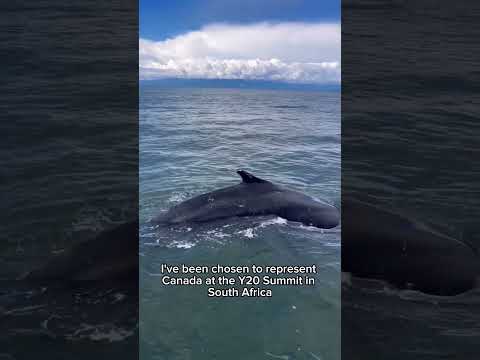
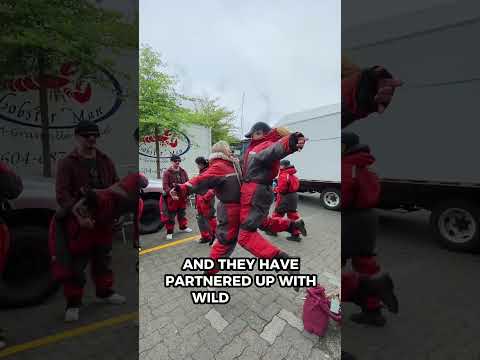
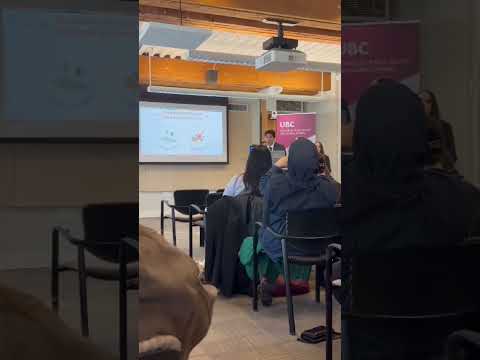
Graduate school is where I honed my analytical skills and learned to communicate for policymakers, public audiences, and everyone else in between. That training gave me what this work demands: the ability to understand complex systems and then drive social change by making those systems legible to the people who can move the needle. In practice, that meant working summers as a marine naturalist at Wild Whales Vancouver and as an outdoor adventure guide, translating complex issues into stories that landed with thousands of people in real time. It meant leading a research project on water governance with the Squamish Nation, where the final deliverable included a visual policy document, a deliberate creative choice to tailor our findings to our Indigenous client. Then came my most exciting challenge: a dual role with Canada's official G20 Youth Delegation. As Engagement Coordinator, I led national stakeholder engagement, youth consultations, and digital strategy; as Track 1 delegate, I represented young Canadians directly in climate negotiations in the first G20 on African soil.
What I have learned through all of it is that the most powerful campaigns are not won through policy or activism alone. They are won because people feel something. That is, they are tangible and salient enough to drive real action long after the rally, the summit, or the tour. That is the kind of communicator I want to be: someone who can hold the technical depth and the emotional truth at the same time, who can write a policy brief in the morning and a message that moves someone to action by the afternoon. Emdash works exclusively on decolonization, climate, and gender justice. These are not client verticals, they are the work I have already been doing and the lens through which I have approached every project in this story. That alignment is not a coincidence. It is why I am applying here specifically.